
How to Use an Espresso Machine: Beginner's Guide
How to Use an Espresso Machine: Beginner's Guide Learning how to use an espresso machine is easier than it may seem, even if you have never made espresso at home before. With the right coffee beans, proper grind size, a…
By Menu Moments
Menu Moments editorial
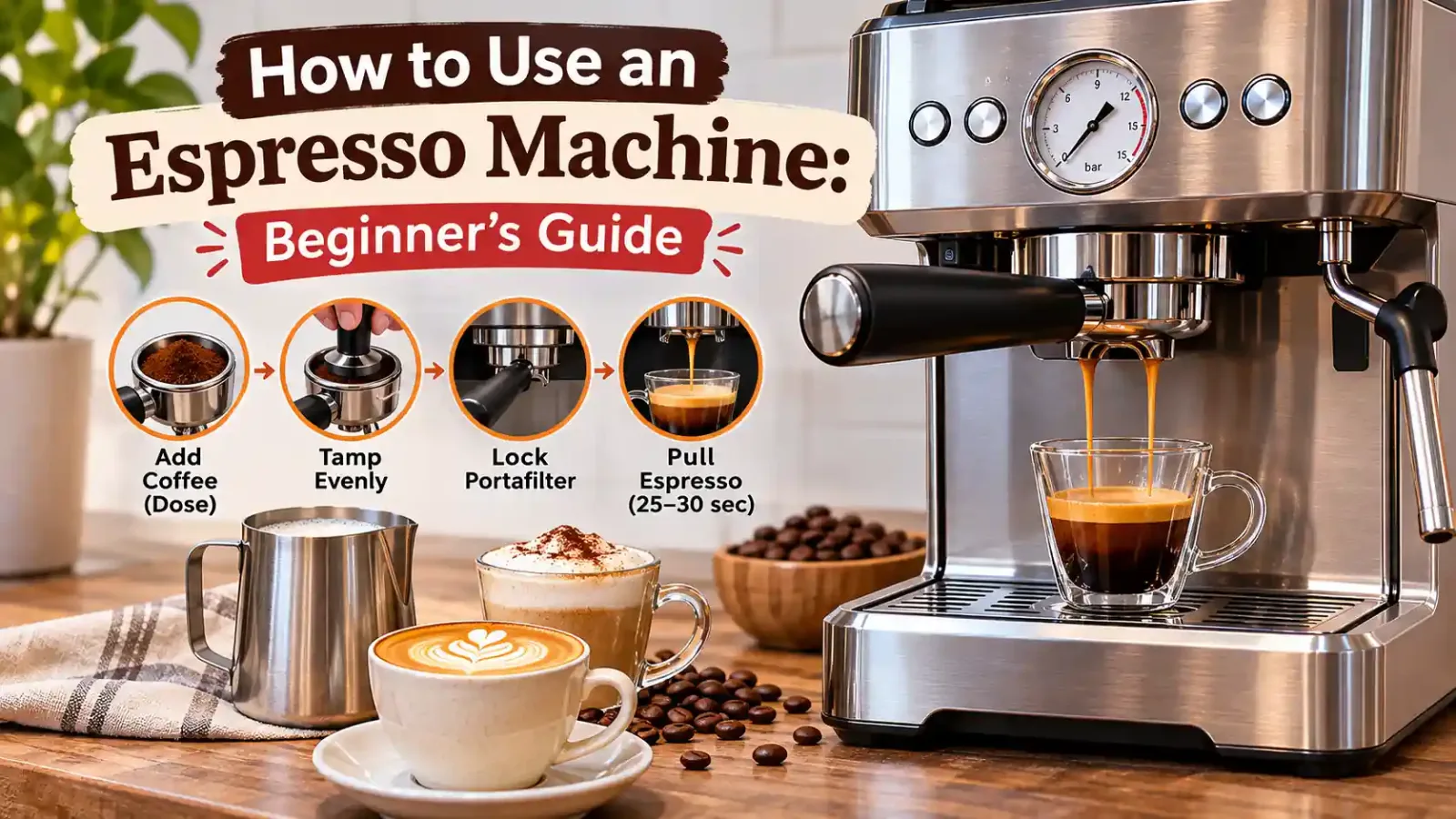
Learning how to use an espresso machine is easier than it may seem, even if you have never made espresso at home before. With the right coffee beans, proper grind size, a little practice, and a basic understanding of your coffee machine, you can prepare rich, flavorful espresso without visiting a coffee shop.
An espresso machine uses pressurized hot water to extract flavor from finely ground coffee, producing a concentrated espresso shot with a distinctive layer of crema. Whether you own a manual, semi-automatic, fully automatic, super-automatic, or pod espresso machine, understanding the basic espresso brewing techniques will help you get better results.
This beginner espresso guide explains everything from preparing your espresso maker and grinding coffee beans to tamping, pulling espresso shots, steaming milk, and maintaining your equipment. You will also learn how to troubleshoot common espresso mistakes and make barista-quality espresso at home.
Understanding How an Espresso Machine Works
Before learning espresso machine operation, it helps to understand the basic components and how they work together.
An espresso machine is a specialized coffee machine designed to force heated water through finely ground coffee at controlled pressure. This process is called coffee extraction.
Most traditional espresso machines use approximately 9-bar pressure during extraction, although actual pressure and brewing temperature depend on the machine's design and settings.
Main Parts of an Espresso Machine
Understanding the main components makes it easier to follow espresso machine instructions.
1. Portafilter
The portafilter is the removable metal handle that holds the ground coffee during brewing. It consists of a portafilter handle and a basket where you place the coffee grounds.
2. Filter Basket
The filter basket fits inside the portafilter and holds the coffee dose.
There are two common types:
Pressurized basket: Designed for beginners and pre-ground coffee. It creates additional resistance to help produce crema.
Non-pressurized basket: Requires a consistent, fine grind and proper puck preparation. It gives experienced users greater control over extraction.
3. Group Head and Brew Head
The group head, sometimes called the brew head, is the section where the portafilter locks into the machine.
Hot water flows through this component and reaches the coffee grounds.
4. Shower Screen
The shower screen distributes water across the coffee puck to promote more even extraction.
5. Tamper
A tamper, also known as a coffee tamper, compresses the ground coffee into a compact, level puck.
6. Steam Wand
The steam wand releases pressurized steam to heat and froth milk for drinks such as lattes and cappuccinos.
7. Water Reservoir
The water reservoir stores the water used for brewing and steaming. Keeping it filled with suitable water is essential for consistent results.
Additional Espresso Accessories
Several accessories can improve your espresso preparation:
Tamper mat: Protects your countertop while tamping.
Distribution tool: Helps distribute coffee grounds evenly before tamping.
WDT tool: Uses thin needles to break up clumps and improve grind distribution.
Dosing funnel: Prevents coffee grounds from spilling out of the filter basket.
Puck screen: Sits on top of the coffee puck and helps distribute water while keeping the shower screen cleaner.
Beginners do not need every accessory immediately. A good grinder, tamper, and suitable basket are enough to get started.
What You Need Before Making Espresso
Before using your espresso machine, gather the necessary equipment and ingredients.
Essential Equipment
| Equipment | Purpose |
|---|---|
| Espresso machine | Extracts espresso coffee |
| Coffee grinder | Grinds whole coffee beans |
| Burr grinder | Produces consistent coffee grounds |
| Tamper | Compresses coffee grounds |
| Portafilter | Holds the filter basket and coffee |
| Milk pitcher | Holds milk for steaming |
| Espresso cup | Collects the espresso shot |
| Coffee scale | Measures coffee dose and output |
Choose the Right Espresso Beans
The quality of your espresso beans has a significant impact on the final flavor.
Look for freshly roasted coffee beans labeled for espresso. Medium and medium-dark roasts are popular choices because they often produce balanced flavors, chocolate notes, caramel sweetness, and a satisfying body.
However, light-roasted beans can also make excellent espresso when prepared correctly.
For the best results:
Purchase whole coffee beans instead of pre-ground coffee.
Check the roast date.
Store beans in an airtight container.
Avoid excessive exposure to heat, moisture, and sunlight.
Grind coffee immediately before brewing.
Why a Burr Grinder Matters
A coffee grinder is one of the most important accessories for espresso preparation.
A burr grinder crushes coffee beans between two grinding surfaces, producing more consistent particles than many basic blade grinders.
Good grind consistency helps control extraction and reduces the likelihood of uneven brewing.
If you are shopping for equipment, explore our guide to the best espresso machines under $500 to compare beginner-friendly options.
How to Prepare an Espresso Machine Before Use
Proper espresso machine preparation helps prevent brewing problems and improves consistency.
Step 1: Place Your Machine on a Stable Surface
Position your espresso maker on a flat, stable countertop.
Make sure there is enough space around the machine for ventilation and convenient access to the water tank, portafilter, and steam wand.
Keep the power cord away from water and hot surfaces.
Step 2: Read the Espresso Machine User Manual
Different machines have different controls, heating systems, and operating procedures.
Read the espresso machine user manual before using the appliance for the first time.
Pay particular attention to:
Water reservoir capacity.
Power button and temperature controls.
Brewing buttons.
Steam settings.
Pressure controls.
Cleaning cycle instructions.
Manufacturer-approved descaling products.
Step 3: How to Fill the Water Tank
Remove the water reservoir if your machine has a removable tank.
Fill it with fresh, clean water that meets the manufacturer's water-quality recommendations.
Avoid using distilled or heavily mineralized water unless your manufacturer specifically recommends it. Water quality affects both espresso flavor and machine longevity.
Replace the reservoir securely and check that it is properly positioned.
Step 4: Turn On the Espresso Machine
If you want to understand how to turn on an espresso machine, start by connecting it to a suitable electrical outlet.
Press the power button and wait for the heating indicator to show that the machine is ready.
Some machines heat up within a minute, while others require several minutes.
Step 5: Allow Espresso Machine Preheating
Espresso machine preheating is important because cold components can reduce brewing temperature.
Allow the machine to reach its operating temperature before making espresso.
You can also warm your cup by running hot water into it or placing it on the machine's cup-warming tray.
Step 6: Perform Machine Priming
Some espresso machines require machine priming before their first use.
Priming means running water through the internal system to fill the boiler or heating circuit and remove trapped air.
Follow the manufacturer's instructions. Usually, this involves running water through the group head or a designated hot-water outlet.
Once the machine is ready, you can begin preparing your espresso.
How to Use an Espresso Machine: Step-by-Step Instructions
Now that you understand the equipment, follow these steps to prepare your first espresso shot.
Step 1: Grind Fresh Coffee Beans
Start by measuring your espresso beans.
Place the beans into your coffee grinder and select a fine coffee grind.
Espresso generally requires a fine grind size, but the exact setting depends on the coffee beans, grinder, and machine.
A good starting point is a grind that resembles fine table salt.
How to Grind Coffee Beans Correctly
Weigh your whole coffee beans.
Add them to your burr grinder.
Select a fine grind setting.
Grind the beans immediately before brewing.
Check the consistency of the ground coffee.
If the coffee is too coarse, water may flow through too quickly, producing weak or sour espresso.
If the grind is too fine, water may struggle to pass through the coffee puck, potentially resulting in bitter espresso or restricted flow.
Adjust your espresso grind settings gradually until you achieve balanced extraction.
Step 2: Measure the Coffee Dose
The coffee dose refers to the amount of ground coffee placed inside the filter basket.
For beginners, these are useful starting measurements:
| Espresso Type | Coffee Dose | Approximate Beverage Yield |
|---|---|---|
| Single espresso | 7–10 g | 20–30 g |
| Double espresso | 16–20 g | 32–40 g |
These measurements are starting points rather than universal requirements. Always consider the basket capacity and coffee manufacturer's recommendations.
How Much Coffee for One Espresso Shot?
A traditional single espresso often uses approximately 7–10 grams of coffee.
A double espresso commonly uses 16–20 grams, although modern specialty coffee recipes frequently use slightly different doses.
For consistent results, weigh the coffee instead of estimating it with a spoon.
Step 3: Add Coffee Grounds to the Filter Basket
Remove the portafilter from the group head.
Make sure the filter basket is clean and dry.
Place the dosing funnel on the basket if available, then add your freshly ground coffee.
Distribute the coffee evenly across the basket.
Good puck preparation helps prevent uneven water flow and improves extraction consistency.
Use a Distribution Tool or WDT Tool
Ground coffee sometimes forms clumps after grinding.
A distribution tool can help level the grounds, while a WDT tool uses thin needles to break up clumps and distribute coffee more evenly.
Remove the dosing funnel before tamping if necessary.
Step 4: Tamp the Coffee Grounds
Place the portafilter on a tamper mat or another stable surface.
Take your tamper and press down firmly and evenly on the coffee grounds.
The goal is to create a flat, consistent coffee puck.
How to Tamp Espresso Correctly
Keep the tamper level.
Apply controlled, even pressure.
Avoid tilting the tamper.
Make sure the surface is smooth.
Avoid repeatedly compressing the same puck.
Consistent tamping helps reduce uneven water movement through the coffee.
Step 5: Add a Puck Screen (Optional)
If you use a puck screen, place it carefully on top of the tamped coffee.
A puck screen can help distribute incoming water and reduce coffee residue on the shower screen.
Make sure it fits comfortably inside the basket without interfering with the group head.
Step 6: Lock the Portafilter Into the Group Head
Lift the portafilter and position it beneath the group head.
Align the portafilter tabs with the locking mechanism.
Turn the portafilter handle until it locks securely into position.
This is an important step because an improperly attached portafilter can leak hot water or coffee during extraction.
Step 7: Pull an Espresso Shot
Place a preheated espresso cup beneath the coffee outlet.
Press the brew button or activate the extraction control.
Hot water passes through the coffee puck under pressure, extracting soluble compounds, oils, and aromatic flavors.
This process produces concentrated espresso coffee.
How Long to Extract Espresso?
A common starting point for a double espresso is approximately 25–30 seconds.
However, espresso extraction time varies according to:
Coffee grind size.
Coffee dose.
Extraction pressure.
Brewing temperature.
Coffee freshness.
Basket design.
Desired espresso ratio.
Instead of relying only on time, measure the beverage output and taste the result.
Step 8: Check the Espresso Crema
A properly extracted espresso often develops a golden-brown layer of foam called crema.
Crema contains emulsified coffee oils and gas released during extraction.
The appearance and thickness of espresso crema depend on coffee freshness, bean variety, roast level, and brewing conditions.
Crema can provide useful visual information, but it is not the only indicator of good espresso.
Taste, balance, aroma, and extraction consistency matter more.
Step 9: Remove the Portafilter
After extraction finishes, carefully remove the portafilter.
Discard the used coffee puck and rinse the basket.
Wipe away loose coffee grounds before preparing another shot.
Your espresso is now ready to drink or use as the base for another coffee beverage.
Understanding Espresso Ratios and Extraction
One of the most important concepts for improving espresso is understanding the coffee-to-water ratio.
The espresso ratio compares the weight of dry coffee grounds with the weight of the finished espresso.
What Is a Good Espresso Ratio?
A 1:2 espresso ratio is a popular starting point.
For example:
18 grams of ground coffee.
36 grams of extracted espresso.
This means the finished beverage weighs approximately twice as much as the dry coffee dose.
Understanding Espresso Shot Volume
Traditional espresso recipes often describe beverage output in milliliters, but weighing espresso is generally more reliable because crema affects volume.
A single espresso shot may produce approximately 25–30 ml, while a double espresso may produce around 50–60 ml.
Actual volume varies with the beans, extraction method, and crema.
What Is Extraction Yield?
Extraction yield refers to the percentage of coffee solids dissolved into the finished beverage compared with the original dry coffee dose.
It helps explain why different brewing settings produce different flavors.
Low extraction can result in sourness and sharp acidity.
Balanced extraction produces sweetness and flavor complexity.
Excessive extraction can contribute to bitterness and dryness.
Under-Extraction vs. Over-Extraction
| Feature | Under-Extraction | Over-Extraction |
|---|---|---|
| Flavor | Sour and sharp | Bitter and dry |
| Body | Often thin | Can feel harsh |
| Common cause | Grind too coarse | Grind too fine |
| Brewing result | Water passes too quickly | Water flows too slowly |
Adjust your grind size and brewing recipe gradually rather than changing several variables at once.
How to Use Different Types of Espresso Machines
Not every espresso maker operates in the same way. The basic brewing principles remain similar, but the controls and preparation steps can vary.
How to Use a Manual Espresso Machine
A manual espresso machine gives you greater control over the brewing process.
Depending on the model, you may control water flow and extraction pressure using a lever.
Basic steps include:
Fill and prepare the machine according to its instructions.
Grind fresh coffee beans.
Fill and tamp the filter basket.
Lock the portafilter into position.
Control the brewing process using the lever.
Monitor extraction and stop when you reach your desired output.
Manual machines require practice because extraction depends heavily on your technique.
How to Use a Semi-Automatic Espresso Machine
Semi-automatic machines are popular among home espresso enthusiasts.
They automate water delivery while allowing you to control grinding, dosing, tamping, and extraction.
The process is straightforward:
Turn on the machine.
Allow it to preheat.
Grind and measure your coffee.
Prepare and tamp the coffee puck.
Lock the portafilter into the group head.
Start the extraction.
Stop brewing when you reach your target output.
This type of machine offers a good balance between convenience and control.
How to Use a Fully Automatic Espresso Machine
A fully automatic espresso machine automates much of the brewing process.
Depending on the model, it may control the grinding, dosing, water delivery, and extraction.
To use one:
Fill the water reservoir.
Add whole coffee beans to the hopper.
Turn on the machine.
Select your preferred coffee drink.
Adjust strength or volume if available.
Press the start button.
Collect your finished espresso.
The machine handles most of the preparation automatically.
How to Use a Super-Automatic Espresso Machine
A super-automatic espresso machine takes convenience further by combining a built-in grinder, brewing system, and sometimes an automatic milk-frothing system.
Most models allow you to select espresso, cappuccino, latte, and other drinks from a control panel.
Follow the display instructions, adjust your preferences, and start brewing.
Regular cleaning and maintenance remain important because these machines contain internal brewing components.
How to Use a Pod Espresso Machine
Pod espresso machines use pre-portioned coffee capsules instead of loose coffee grounds.
They are particularly convenient for beginners who want consistent preparation without grinding and tamping.
Follow these steps:
Fill the water reservoir.
Turn on the machine.
Insert a compatible coffee capsule.
Close the capsule compartment.
Place a cup underneath the coffee outlet.
Select the desired brewing size.
Press the brew button.
Remove and discard the used capsule.
Always use capsules compatible with your specific machine.
How to Steam Milk and Make Espresso-Based Drinks
Once you know how to pull an espresso shot, you can experiment with popular coffee drinks.
Most traditional espresso machines include a steam wand for milk frothing.
How to Steam Milk
Steaming milk involves introducing controlled amounts of air while heating the milk to create smooth microfoam.
You will need:
Fresh cold milk.
A stainless steel milk pitcher.
A clean steam wand.
An espresso shot.
Follow these steps:
Pour cold milk into your milk pitcher.
Purge the steam wand briefly to remove condensation.
Position the steam wand just below the milk surface.
Introduce a small amount of air.
Lower the wand slightly to create a rolling motion.
Continue heating until the milk reaches your desired milk temperature.
Turn off the steam.
Clean the steam wand immediately.
For many milk-based drinks, approximately 55–65°C (131–149°F) is a useful target range.
Avoid overheating the milk because excessive heat can damage its natural sweetness and texture.
What Is Microfoam?
Microfoam is finely textured milk containing very small, evenly distributed air bubbles.
It creates a smooth, glossy texture that works well in espresso-based drinks.
Good microfoam should pour smoothly rather than forming large, dry bubbles.
Popular Espresso Drinks You Can Make
Latte
A latte combines espresso with steamed milk and a thin layer of milk foam.
It has a smooth texture and a relatively mild coffee flavor.
Learn the complete process in our guide on how to make a latte with an espresso machine.
Cappuccino
A cappuccino typically combines espresso, steamed milk, and a generous layer of milk foam.
It has a stronger coffee character than a larger latte.
Macchiato
A traditional espresso macchiato consists of espresso topped with a small amount of milk foam.
It maintains a strong espresso flavor.
Americano
An Americano is prepared by adding hot water to an espresso shot.
It creates a larger beverage with a flavor profile closer to brewed coffee.
Flat White
A flat white combines espresso with steamed milk and a thin layer of smooth microfoam.
It typically has a stronger coffee-to-milk character than a latte.
Espresso Lungo
A lungo is made by allowing more water to pass through the coffee grounds during extraction.
It produces a larger espresso beverage.
Ristretto
A ristretto uses a shorter extraction than a standard espresso.
It produces a smaller, concentrated beverage with a different balance of sweetness, acidity, and bitterness.
Common Espresso Mistakes Beginners Should Avoid
Even when you follow the correct process, your first espresso may not taste perfect.
Understanding common espresso mistakes makes it easier to improve your brewing technique.
Using the Wrong Coffee Grind Size
Coffee grind size has a direct impact on extraction.
If the grind is too coarse, water may pass through too quickly.
If the grind is too fine, water may flow too slowly or struggle to pass through the puck.
Adjust the grinder gradually until you achieve a balanced extraction.
Inconsistent Tamping
Uneven tamping can create pathways through the coffee puck.
This problem is known as coffee puck channeling.
When water follows these channels, some coffee grounds receive more water than others, producing inconsistent extraction.
Use a level tamper and distribute the grounds properly before tamping.
Using Stale Coffee Beans
Coffee beans lose aroma and freshness over time.
Stale beans may produce flat espresso with less crema and reduced flavor complexity.
Choose freshly roasted beans and store them correctly.
Ignoring Brewing Temperature
Brewing temperature affects how efficiently water extracts flavor from coffee.
Different beans and roast levels may respond better to slightly different temperatures.
Follow your machine's recommended settings and adjust gradually if temperature control is available.
Using Poor-Quality Water
Water quality affects both espresso flavor and machine maintenance.
Excessive minerals can contribute to scale buildup, while unsuitable water chemistry may affect extraction.
Use water that meets your machine manufacturer's recommendations.
Changing Too Many Settings at Once
If your espresso tastes unpleasant, avoid immediately changing the grind size, dose, temperature, and extraction time together.
Adjust one variable at a time so you can understand which change improves the result.
Espresso Troubleshooting: How to Fix Common Problems
Espresso troubleshooting becomes easier when you understand the relationship between grind size, coffee dose, water flow, and extraction.
Why Is My Espresso Not Coming Out?
Possible reasons include:
Coffee grind is too fine.
Too much coffee is in the filter basket.
The portafilter is blocked.
The machine has an airlock.
The water reservoir is empty.
The machine requires cleaning or maintenance.
Check the water supply, basket, and grinder settings before trying again.
Why Is My Espresso Bitter?
Bitter espresso may result from excessive extraction, unsuitable beans, or brewing conditions.
Try:
Grinding slightly coarser.
Reducing the extraction yield.
Checking brewing temperature.
Using fresher coffee beans.
Cleaning the group head and basket.
Why Is My Espresso Sour?
Sour espresso can indicate under-extraction.
Potential solutions include:
Grinding slightly finer.
Increasing the beverage yield.
Checking brewing temperature.
Improving coffee distribution.
Adjusting your espresso ratio.
Why Is My Espresso Watery?
Watery coffee may result from an incorrect coffee dose, excessive water output, or an unsuitable grind size.
Weigh your coffee and finished espresso to maintain a consistent recipe.
Why Is My Espresso Weak?
Weak espresso can result from insufficient coffee, stale beans, or poor extraction.
Use freshly ground coffee, measure your dose, and check your grind settings.
Why Is My Espresso Machine Not Building Pressure?
If your espresso machine is not building pressure, possible causes include:
Incorrect grind size.
An empty water tank.
A clogged filter basket.
A dirty shower screen.
Internal scale buildup.
A malfunctioning pump or pressure system.
Check the user manual before attempting maintenance or repairs. For internal mechanical problems, contact an authorized service technician.
How to Get Perfect Espresso Crema
Crema is one of the most recognizable characteristics of espresso.
Although a thick crema may look attractive, it does not automatically mean that the coffee is excellent.
To improve crema production:
Use fresh espresso beans.
Grind immediately before brewing.
Choose an appropriate grind size.
Measure your coffee dose.
Maintain consistent puck preparation.
Check brewing temperature and pressure.
Keep your machine clean.
Some coffee varieties naturally produce more crema than others. Robusta-containing blends, for example, often produce more crema than many Arabica-only coffees.
Focus on balanced flavor rather than crema thickness alone.
Espresso Machine Cleaning and Maintenance
Regular espresso machine maintenance keeps your equipment functioning properly and helps preserve coffee flavor.
Coffee oils and residue can accumulate inside the portafilter, filter basket, group head, and shower screen.
Milk residue can also build up inside the steam wand.
Daily Espresso Machine Cleaning
After making espresso:
Remove used coffee grounds.
Rinse the filter basket.
Clean the portafilter.
Flush the group head.
Wipe the shower screen.
Clean the steam wand.
Empty and rinse the drip tray.
Backflushing
Backflushing is a cleaning process used by compatible espresso machines.
It involves running water through the group head and three-way valve using a blind filter basket.
Some machines require a specific cleaning cycle or detergent.
Never backflush a machine unless its manufacturer supports the procedure.
Cleaning Cycle
Modern espresso machines may include an automatic cleaning cycle.
Follow the display instructions and use only manufacturer-approved cleaning products.
For a detailed maintenance routine, read our guide on how to clean an espresso machine.
Descaling
Descaling removes mineral deposits that accumulate inside the machine's water system.
How frequently you need to descale depends on water hardness, usage, and manufacturer recommendations.
Use an approved descaling solution rather than household chemicals.
Water Reservoir Maintenance
Empty and rinse the water reservoir regularly.
Refill it with fresh water that meets the machine's specifications.
Avoid leaving stagnant water inside the reservoir for extended periods.
Espresso Machine Safety Tips for Beginners
Espresso machines use electricity, hot water, steam, and pressurized systems. Following basic safety precautions is important.
Place the machine on a stable, dry countertop.
Keep electrical connections away from water.
Never touch the steam wand while it is hot.
Avoid opening pressurized components during operation.
Never force the portafilter into the group head.
Allow hot components to cool before cleaning.
Keep children away from hot water outlets.
Follow the manufacturer's operating instructions.
Disconnect the appliance before performing maintenance that requires it.
If your machine develops an electrical fault, unusual noise, or pressure-related problem, stop using it and seek professional assistance.
How to Make Barista-Quality Espresso at Home
Making barista-quality espresso at home is primarily about consistency.
Professional baristas rely on accurate measurements, proper equipment, fresh coffee, and repeatable brewing techniques.
Here are practical ways to improve your results.
Use a Consistent Espresso Recipe
Start with an 18-gram coffee dose and aim for approximately 36 grams of espresso.
Use this as your baseline recipe and adjust according to taste.
Invest in a Good Coffee Grinder
A quality burr grinder provides better grind consistency and more precise control.
It can make a noticeable difference in espresso quality.
Keep Your Equipment Clean
Coffee oils and residue affect flavor.
Clean your portafilter, filter basket, group head, and steam wand regularly.
Learn to Adjust Espresso Grind Settings
Grind adjustment is one of the most useful skills for home espresso preparation.
If the coffee extracts too quickly, try grinding finer.
If extraction is too slow, try grinding coarser.
Make small adjustments and record the results.
Experiment With Different Coffee Beans
Try different roast levels, origins, and blends.
Brazilian, Colombian, Ethiopian, and other specialty coffee beans can produce different flavor profiles.
Experimenting helps you discover which espresso beans suit your preferences.
Practice Milk Frothing
If you enjoy milk-based drinks, practice creating smooth microfoam.
Good milk texture improves the overall drinking experience and makes latte art easier.
Espresso Machine FAQs
1. How do you use an espresso machine for the first time?
Fill the water reservoir, turn on the machine, allow it to preheat, and follow the manufacturer's priming instructions. Grind fresh coffee, fill the filter basket, distribute and tamp the grounds, lock the portafilter into the group head, and start extraction.
2. How much coffee do I need for one espresso shot?
A traditional single espresso typically uses 7–10 grams of ground coffee. A double espresso commonly uses 16–20 grams. The exact amount depends on your filter basket and preferred recipe.
3. How much water do you use for espresso?
A common starting ratio is 1:2. For example, 18 grams of coffee can produce approximately 36 grams of espresso. The amount of water passing through the machine will be greater than the final beverage weight because some water remains in the coffee puck.
4. How long should an espresso shot take?
A common starting point is approximately 25–30 seconds for a double espresso. However, the ideal extraction time depends on the coffee, grind size, dose, and desired flavor.
5. Do I need a coffee grinder to use an espresso machine?
A grinder is highly recommended for traditional espresso machines because freshly ground coffee provides better control over extraction. Pod machines and some fully automatic machines have different requirements.
6. Can I use regular coffee grounds in an espresso machine?
You can use coffee grounds in an espresso machine if their grind size is suitable for the machine and basket. However, regular pre-ground drip coffee is often too coarse for a traditional non-pressurized espresso basket.
7. What is the best grind size for espresso?
A fine grind is generally suitable for espresso. However, the ideal setting depends on your grinder, coffee beans, basket, and extraction recipe.
8. Why does my espresso have no crema?
Possible reasons include stale coffee beans, unsuitable grind size, low extraction pressure, or the characteristics of the coffee itself. Use fresh beans and check your machine settings.
9. Can beginners use a semi-automatic espresso machine?
Yes. Semi-automatic machines are excellent for beginners who want to learn grinding, dosing, tamping, and extraction while retaining control over the brewing process.
10. Is an espresso machine better than a regular coffee machine?
An espresso machine produces concentrated coffee using pressure, while a standard drip coffee machine uses gravity to pass water through coffee grounds. Neither is universally better; the right choice depends on your preferred coffee drinks.
11. Should I clean my espresso machine after every use?
Yes. Rinse the portafilter and basket, flush the group head, and wipe the steam wand after use. Perform deeper cleaning according to the manufacturer's maintenance schedule.
12. How often should I descale my espresso machine?
Descaling frequency depends on water hardness, machine usage, and manufacturer recommendations. Follow the maintenance instructions for your particular model.
13. Can I make a latte with any espresso machine?
You can make a latte with an espresso machine that produces espresso and provides a way to heat and froth milk. Machines without steam wands may require a separate milk frother.
14. What is the difference between a single espresso and a double espresso?
A single espresso uses a smaller coffee dose and produces a smaller beverage, while a double espresso uses approximately twice the coffee and produces a larger, more concentrated serving.
15. What should I do if my espresso machine stops working?
Check the power supply, water reservoir, machine settings, and cleaning requirements. If the issue involves internal pressure, electrical components, or mechanical failure, consult the manufacturer or a qualified technician.
Final Thoughts
Learning how to use an espresso machine takes practice, but the process becomes much easier once you understand the basic steps. Start with fresh espresso beans, a suitable burr grinder, an accurate coffee dose, consistent tamping, and proper extraction.
Pay attention to grind size, espresso ratio, brewing temperature, and extraction time. These factors influence whether your espresso tastes balanced, sour, bitter, or weak.
Whether you use a manual, semi-automatic, fully automatic, super-automatic, or pod espresso machine, consistency is the key to improving your results.
With regular practice and proper espresso machine maintenance, you can enjoy delicious espresso, cappuccinos, lattes, Americanos, and other coffee drinks from the comfort of your home.
Enjoyed this tip?
A weekly hit of kitchen know-how.
Tips, techniques and small upgrades — every Sunday.
Keep reading
You might also like
 →
How to Descale an Espresso Machine
How to Descale an Espresso Machine: A Complete Step-by-Step Guide Descaling an espresso machine is an essential part of keeping your coffee equipment clean, efficient, and working properly. Over time, minerals from…
· 19 min read
 →
How to Clean a DeLonghi Espresso Machine (Step-by-Step Guide)
How to Clean a DeLonghi Espresso Machine: A Complete Step-by-Step Guide Aclean espresso machine is essential for making fresh, flavorful coffee and keeping your equipment in excellent working condition. Whether you own…
· 23 min read
7 Best Espresso Machines Under $500 (2026 Buying Guide)
Discover the best espresso machine under $500. Compare Breville, Gaggia, De'Longhi, and CASABREWS models by price, features, pros, and cons.
· 34 min read