
How to Descale an Espresso Machine
How to Descale an Espresso Machine: A Complete Step-by-Step Guide Descaling an espresso machine is an essential part of keeping your coffee equipment clean, efficient, and working properly. Over time, minerals from…
By Menu Moments
Menu Moments editorial
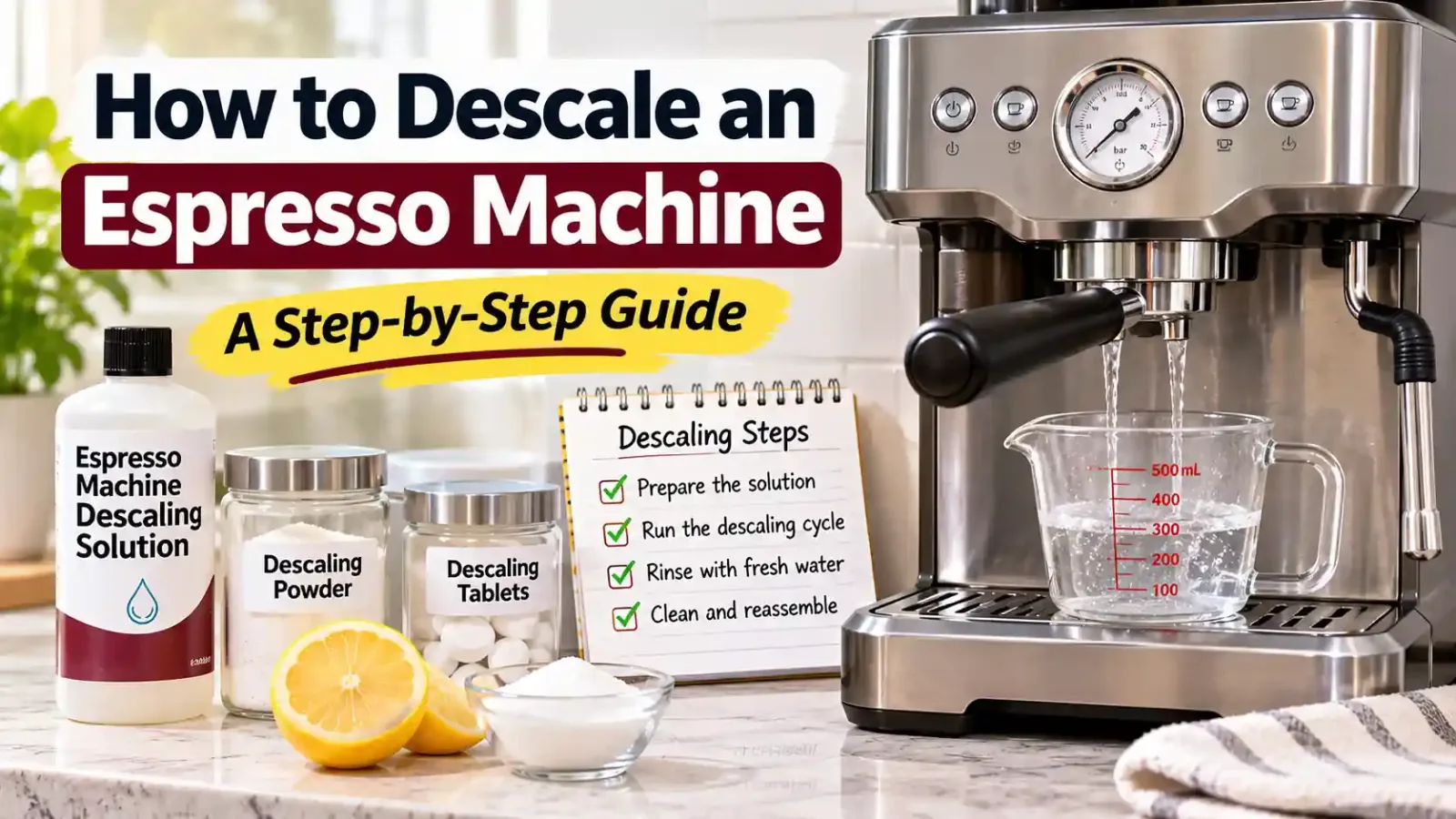
How to Descale an Espresso Machine: A Complete Step-by-Step Guide
Descaling an espresso machine is an essential part of keeping your coffee equipment clean, efficient, and working properly. Over time, minerals from water accumulate inside the machine, creating limescale buildup that can affect water flow, brewing temperature, coffee taste, and overall performance. If you regularly make espresso at home, learning how to descale an espresso machine can help prevent expensive repairs and extend its lifespan.
Whether you own a Breville, DeLonghi, Nespresso, Keurig, Philips, Gaggia, Jura, or Sage espresso machine, the descaling process helps remove mineral deposits from internal components that regular cleaning cannot reach.
This beginner-friendly guide explains espresso machine descaling, the supplies you need, how to choose the right descaling solution, and how to complete the process safely. You will also learn how often to descale your machine, which household ingredients to avoid, and how to troubleshoot common descaling problems.
What Is Espresso Machine Descaling?
Espresso machine descaling is the process of removing mineral deposits and limescale buildup from the internal components of a coffee machine. These deposits develop when water containing dissolved minerals passes through the machine repeatedly.
Tap water often contains calcium and magnesium. When water heats inside an espresso machine, these minerals can gradually form solid deposits, particularly around the boiler, thermoblock, heating element, and internal water lines.
A specialized espresso machine descaler dissolves these deposits so they can be flushed out during the descaling cycle.
Unlike regular espresso machine cleaning, which removes coffee oils, coffee residue, and other surface contaminants, descaling focuses on mineral accumulation inside the water system.
Why Does Limescale Build Up Inside an Espresso Machine?
Limescale develops because water naturally contains dissolved minerals. The amount depends on your local water quality and water hardness.
Hard water contains higher concentrations of calcium and magnesium. When heated, these minerals can form calcium carbonate deposits that attach to internal surfaces.
Over time, scale accumulation can affect several machine components:
Boiler: Mineral deposits can collect around the heating chamber.
Thermoblock: Limescale can restrict narrow water passages.
Heating element: Mineral buildup can reduce heating efficiency.
Water pump: Scale can interfere with consistent water movement.
Internal water lines: Deposits can restrict water circulation.
Group head: Mineral accumulation can affect water distribution.
Regular espresso machine descaling helps prevent these problems and supports consistent brewing performance.
Why Is It Important to Descale an Espresso Machine?
Descaling is more than an optional cleaning task. It is an important part of coffee machine maintenance, especially if you use tap water or live in an area with hard water.
Here are the main reasons to descale your machine regularly.
1. Prevents Limescale Buildup
Mineral deposits gradually accumulate inside the machine. If you ignore them, limescale can restrict water movement and affect important components.
A suitable descaling solution helps dissolve these deposits before they become difficult to remove.
2. Improves Water Flow and Pressure
A clogged coffee machine may produce reduced water flow or low water pressure.
This can happen when mineral deposits restrict internal water lines or interfere with the water pump.
Removing limescale helps restore normal water circulation when mineral buildup is the underlying problem.
3. Maintains Consistent Brewing Temperature
An espresso machine needs stable water temperature to extract coffee properly.
Mineral deposits around the heating element, boiler, or thermoblock can interfere with heat transfer. Regular descaling helps maintain efficient heating performance.
4. Protects Coffee Taste
Limescale and other internal buildup can contribute to inconsistent brewing conditions.
Although coffee taste is also affected by beans, grind size, water quality, and extraction settings, keeping your machine properly maintained helps support a consistent flavor.
5. Extends Your Machine's Lifespan
Preventive maintenance can reduce unnecessary strain on internal components.
Following the manufacturer's maintenance schedule helps protect your investment and may reduce the risk of expensive repairs.
What Do You Need to Descale an Espresso Machine?
Before starting, collect the necessary supplies. Having everything ready makes the process easier and reduces the chance of interrupting the descaling cycle.
Here is what you may need:
Item | Purpose |
|---|---|
Descaling solution | Dissolves mineral deposits |
Descaling powder | Alternative descaling product |
Descaling tablets | Pre-measured descaling option |
Fresh water | Dilutes the descaler and rinses the machine |
Measuring cup | Measures the correct liquid quantity |
Large container | Collects discharged water |
Microfiber cloth | Cleans exterior surfaces |
Manufacturer's manual | Provides model-specific instructions |
Choosing the Right Espresso Machine Descaler
An espresso machine descaler is a specially formulated product designed to remove mineral deposits without unnecessarily damaging compatible machine components.
You can find different types of descaling products:
Liquid descaling solution: Convenient to measure and mix with water.
Descaling powder: Usually needs to be dissolved in water before use.
Descaling tablets: Pre-measured products that may be easier to handle and store.
Choose a food-safe descaler that is specifically approved for your espresso machine. A manufacturer-recommended descaler is generally the safest starting point.
Always check the product label and your machine's instructions before using any cleaning chemical.
How to Descale an Espresso Machine: Step-by-Step Instructions
The exact process varies between espresso machine brands and models, but most machines follow a similar procedure.
Follow these step-by-step descaling instructions to clean your machine safely.
Step 1: Read the Manufacturer's Instructions
Start by checking your espresso machine's user manual.
Different manufacturers use different descaling procedures. Some machines have an automatic descaling program, while others require manual descaling.
Check the manual for:
Recommended descaling product.
Required descaling solution quantity.
Water-to-descaler ratio.
Descaling cycle activation.
Whether the machine needs to be heated.
Rinsing requirements.
Any removable components that need special attention.
Never assume every espresso machine uses the same descaling method.
Step 2: Turn Off the Machine and Prepare It
Switch off your espresso machine and allow it to cool if required by the manufacturer.
Remove the portafilter and empty any remaining coffee grounds.
You should also:
Remove the used coffee puck.
Empty the drip tray.
Remove any remaining water from the water reservoir.
Remove the water filter if the manufacturer instructs you to do so.
Empty the water tank completely.
If your machine has a removable brew group, follow the manual regarding whether it should be removed before descaling.
Step 3: Prepare the Descaling Solution
The next step is preparing your descaling solution.
Use a commercial descaling solution, descaling powder, or descaling tablets approved for your machine.
If you are using liquid descaler, measure the recommended quantity and mix it with water according to the product instructions.
For powder or tablets, dissolve the required amount completely before using it, unless the manufacturer's instructions specify otherwise.
How Much Descaler Should You Use?
There is no universal quantity because descaling products have different concentrations.
For example, some products require a specific amount of solution mixed with a full water tank, while others use pre-measured tablets.
Always follow the product label instead of guessing the quantity.
Step 4: Fill the Water Reservoir
Pour the prepared solution into the water reservoir or water tank.
Make sure you do not exceed the maximum fill line.
If your machine has a water filter cartridge, follow the manufacturer instructions regarding removal during descaling.
Place a large container underneath the group head and hot water outlet to collect the discharged solution.
If your machine uses a steam wand as part of its descaling procedure, position another suitable container underneath it.
Step 5: Start the Descaling Cycle
Now you can begin the actual descaling process.
There are two common methods:
Automatic Descaling Program
Many modern espresso machines include an automatic descaling program.
To start it:
Turn on the machine.
Check that the water reservoir contains the prepared solution.
Enter the maintenance or descaling menu.
Select the descaling option.
Follow the displayed instructions.
Allow the machine to complete the programmed cycle.
The machine may release the solution through the group head, steam wand, and hot water outlet.
Do not interrupt the automatic descaling program unless the manufacturer instructs you to do so.
Manual Descaling
Some espresso machines require manual descaling.
For these models:
Turn on the machine if instructed.
Run the descaling solution through the group head.
Allow the solution to pass through the internal water lines.
Operate the steam wand or hot water outlet if required.
Pause between cycles if instructed by the manufacturer.
Continue until the recommended solution has passed through the system.
Manual descaling may require more attention because you control the water outlets and timing.
Step 6: Allow the Descaling Solution to Work
Descaling products need sufficient contact time to dissolve mineral deposits.
Some automatic machines control this process themselves. Other machines require you to pause between stages.
Follow the manufacturer's instructions rather than leaving the solution inside the machine longer than recommended.
The descaler works on mineral deposits such as calcium deposits, magnesium deposits, and calcium carbonate.
Step 7: Empty and Clean the Water Reservoir
Once the descaling cycle finishes, remove the remaining solution from the water reservoir.
Rinse the reservoir thoroughly with fresh water to remove any leftover descaler.
If the water tank has visible residue, clean it according to the manufacturer's instructions.
Do not put soap or household cleaning chemicals inside internal water passages unless specifically approved.
Step 8: Rinse the Espresso Machine Thoroughly
Rinsing is one of the most important parts of espresso machine descaling.
Fill the water reservoir with clean, fresh water and run the machine's rinse cycle.
If your machine does not have an automatic rinse program, follow its manual for flushing the group head, steam wand, and hot water outlet.
You may need to perform more than one fresh water flush.
Continue until the recommended rinsing procedure is complete.
How to Rinse an Espresso Machine After Descaling
For a typical machine, the process involves:
Filling the water tank with fresh water.
Running water through the group head.
Flushing the hot water outlet.
Flushing the steam wand if required.
Emptying the collection container.
Repeating the rinse cycle as instructed.
Never assume one rinse is sufficient for every model.
Step 9: Reinstall the Water Filter
If you removed a reusable water filter before descaling, reinstall it according to the manufacturer's instructions.
If the filter has reached the end of its service life, perform a water filter replacement.
Some machines require a new water filter cartridge after descaling.
Follow the manufacturer's recommendations to ensure the filtration system works correctly.
Step 10: Complete Post-Descaling Cleaning
After descaling, clean the removable components and exterior surfaces.
Pay attention to:
Portafilter.
Group head.
Drip tray.
Water reservoir.
Steam wand.
Hot water outlet.
Removable brew group, where applicable.
Use appropriate cleaning tablets for coffee residue and coffee oils if your machine requires them.
Descaling removes mineral deposits, but it does not replace regular espresso machine cleaning or backflushing.
For a more complete maintenance routine, read our guide on how to clean an espresso machine.
How Often Should You Descale an Espresso Machine?
The descaling frequency depends on your water hardness, machine type, usage, and filtration system.
If you use hard tap water and prepare several cups of coffee every day, you may need to descale more frequently than someone who uses filtered water occasionally.
A practical starting point is to follow your manufacturer's recommended maintenance interval.
Usage and water conditions | Recommended approach |
|---|---|
Hard water | Follow a shorter manufacturer-approved interval |
Moderately hard water | Monitor the descale indicator |
Soft or filtered water | Follow the manufacturer's maintenance schedule |
Heavy daily use | Monitor machine performance and maintenance alerts |
Occasional use | Follow the model-specific schedule |
When to Descale an Espresso Machine
You should consider descaling when:
The descaling warning light appears.
The machine displays a descale indicator.
Water flow becomes noticeably slower.
The machine takes longer to heat up.
The machine produces unusual noises.
Coffee extraction becomes inconsistent.
Your manufacturer's maintenance schedule says it is due.
These signs do not always mean limescale is the problem. A clogged filter, blocked group head, or pump issue can cause similar symptoms.
Can You Use Vinegar to Descale an Espresso Machine?
White vinegar is a common household cleaning ingredient, but it is not necessarily suitable for espresso machines.
Vinegar contains acetic acid, which can dissolve some mineral deposits. However, it may damage certain seals, gaskets, metal components, or internal materials depending on the machine.
Some manufacturers specifically advise against using vinegar.
For this reason, a compatible commercial descaling solution is generally a better choice.
Vinegar vs Descaling Solution
Feature | White vinegar | Commercial descaling solution |
|---|---|---|
Main ingredient | Acetic acid | Varies by formulation |
Limescale removal | Can dissolve some deposits | Formulated for descaling |
Machine compatibility | Depends on manufacturer | Depends on product approval |
Odor | Strong vinegar smell | Usually less persistent |
Recommended use | Only if manufacturer permits | Preferred when manufacturer approves |
Can You Use Citric Acid to Descale an Espresso Machine?
Citric acid is another substance that can dissolve mineral deposits.
It is used in some commercial descaling products, but pure citric acid is not automatically safe for every espresso machine.
Its compatibility depends on the machine's materials and the manufacturer's instructions.
Citric Acid vs Commercial Descaler
Citric acid can be an ingredient in commercial descaling products. Other formulations may contain lactic acid or different descaling agents.
A commercial product is generally preferable when it has been tested or approved for your particular machine.
What About Baking Soda?
Can you use baking soda to descale an espresso machine?
Generally, no. Baking soda is not an appropriate descaling agent because it does not effectively dissolve limescale. It may also leave residue inside the machine.
Can You Descale an Espresso Machine With Lemon Juice?
Lemon juice contains citric acid, but its concentration varies. It may also contain sugars and other organic substances that can leave residue.
It is better to use an approved espresso machine descaler instead.
Espresso Machine Descaling Without Vinegar
If you prefer not to use vinegar, you have several alternatives:
Manufacturer-recommended descaler.
Compatible liquid descaling solution.
Approved descaling powder.
Compatible descaling tablets.
Commercial descaler containing citric acid or lactic acid.
Always check compatibility before using a product.
How to Descale Different Espresso Machine Brands
Although the basic descaling process is similar, different manufacturers have different maintenance procedures.
The following sections explain what to consider for popular espresso machine brands in the United States.
How to Descale a Breville Espresso Machine
Breville espresso machines, including the Barista Express and Barista Pro, have model-specific descaling procedures.
Generally, you should:
Prepare the recommended descaling solution.
Empty the drip tray and water tank.
Remove the water filter if required.
Add the descaling mixture to the reservoir.
Activate the appropriate maintenance program.
Follow the machine's displayed or manual instructions.
Complete the required rinse cycle.
For detailed model-specific steps, read our guide on how to descale a Breville espresso machine.
How to Descale a DeLonghi Espresso Machine
DeLonghi espresso machines may include automatic descaling programs.
A typical process involves:
Filling the reservoir with the approved descaling solution.
Placing a suitable container under the coffee and hot water outlets.
Activating the descaling program.
Allowing the solution to circulate.
Emptying and rinsing the water reservoir.
Completing the fresh water rinse.
Different DeLonghi models may use different button combinations and maintenance procedures.
Always check your model's manual.
How to Descale a Nespresso Machine
Nespresso machines generally provide a dedicated descaling procedure.
For many models:
Remove used capsules.
Empty the capsule container and drip tray.
Add the approved descaling solution to the water reservoir.
Enter descaling mode using the model-specific button sequence.
Place a container beneath the coffee outlet.
Run the descaling cycle.
Empty and rinse the reservoir.
Complete the fresh water rinse cycle.
Exit descaling mode.
Nespresso Original and Vertuo machines can have different procedures, so check the exact model instructions.
How to Descale a Keurig Coffee Machine
Keurig coffee machines are primarily single-serve brewers rather than traditional espresso machines, but they also require periodic descaling.
The general process includes:
Removing any K-Cup pod.
Emptying the water reservoir.
Adding the Keurig-approved descaling solution.
Running the machine's descaling procedure.
Discarding the discharged liquid.
Filling the reservoir with fresh water.
Completing the required rinse cycles.
Follow the instructions for your particular Keurig model.
How to Descale a Philips Espresso Machine
Philips fully automatic espresso machines often include a dedicated descaling program.
The general procedure involves:
Removing or checking the water filter as instructed.
Preparing the recommended descaling solution.
Filling the water reservoir.
Activating the descaling program.
Following the machine's instructions.
Completing the rinse cycle.
Reinstalling or replacing the water filter if needed.
Some Philips models use AquaClean filters, which can affect the maintenance schedule.
How to Descale a Gaggia Espresso Machine
Gaggia espresso machines may have different descaling requirements depending on whether they are manual or fully automatic.
For compatible models:
Prepare the recommended descaler.
Empty the water reservoir.
Add the prepared solution.
Follow the model-specific descaling instructions.
Flush the relevant water outlets.
Rinse the reservoir.
Complete the fresh water flush.
Avoid assuming that a Gaggia Classic and a Gaggia fully automatic machine use identical procedures.
How to Descale a Jura Coffee Machine
Jura automatic coffee machines often use dedicated maintenance programs and compatible descaling tablets.
The general procedure is:
Check the machine's maintenance notification.
Remove or check the water filter according to the instructions.
Dissolve the required tablets as directed.
Activate the descaling program.
Follow the display prompts.
Complete the rinsing process.
Jura machines may have specific requirements regarding water filters and descaling tablets.
How to Descale a Sage Espresso Machine
Sage espresso machines are closely related to several Breville models, but maintenance instructions can vary by product and market.
A typical process includes:
Preparing an approved descaling solution.
Emptying the water reservoir.
Following the machine's descaling instructions.
Running the designated maintenance cycle.
Flushing the system with fresh water.
Check your exact Sage model before starting.
Common Descaling Problems and How to Fix Them
Sometimes, an espresso machine may not complete the descaling process correctly. Understanding common troubleshooting problems can help you identify the cause.
Descaling Solution Is Not Flowing
If descaling solution is not flowing through your machine, possible causes include:
An empty water reservoir.
An airlock in the water system.
A blocked internal water line.
A clogged filter.
A pump problem.
Significant mineral buildup.
Check the water tank and follow the manufacturer's priming instructions.
If the pump cannot draw water, avoid repeatedly running it dry. Contact an authorized service provider if the problem continues.
Espresso Machine Is Not Pumping Water
An espresso machine not pumping water may have several underlying problems.
Check:
Whether the water reservoir is properly installed.
Whether the reservoir contains enough water.
Whether the water filter is correctly installed.
Whether the machine requires priming.
Whether the water inlet is blocked.
Descaling may help if mineral deposits are restricting water flow, but it will not repair a damaged pump.
Descale Light Not Turning Off
If the descale light remains on after cleaning, the machine may not have registered the completed descaling cycle.
Possible reasons include:
The automatic descaling program was interrupted.
The rinse cycle was incomplete.
The machine was not reset correctly.
The wrong button sequence was used.
The machine requires another maintenance step.
Consult the manufacturer's instructions for resetting the descale indicator.
Descaling Cycle Is Stuck
If the descaling cycle becomes stuck, do not immediately unplug the machine.
First, check the display for instructions and make sure the water reservoir is properly installed.
If the machine is unresponsive, follow the manufacturer's troubleshooting procedure.
Avoid forcing the cycle to continue because this may cause additional problems.
Reduced Water Flow After Descaling
Reduced water flow after descaling may indicate remaining mineral deposits, a blocked filter, or another mechanical issue.
Check the water filter, group head, and removable components.
If water flow does not improve, professional servicing may be necessary.
How to Prevent Limescale Buildup in an Espresso Machine
Preventing mineral deposits is easier than dealing with severe scale accumulation.
A consistent preventive maintenance routine can help reduce limescale and protect internal components.
1. Use Filtered Water
Filtered water can help improve water quality and reduce certain minerals, depending on the filtration system.
However, not every water filter removes the minerals responsible for limescale.
Choose a filtration system compatible with your machine.
2. Monitor Water Hardness
Water hardness measures the concentration of dissolved calcium and magnesium.
You can use water hardness test strips to check your water supply.
If your home has hard water, follow a suitable filtration and descaling schedule.
3. Replace the Water Filter Cartridge
A water filter cartridge has a limited service life.
Replace it according to the manufacturer's instructions. An expired cartridge may not provide the intended filtration performance.
4. Maintain a Regular Maintenance Schedule
Create a regular maintenance schedule that includes:
Daily emptying of the drip tray.
Regular cleaning of the portafilter.
Group head cleaning.
Steam wand cleaning after use.
Backflushing when supported.
Cleaning tablets when recommended.
Periodic descaling.
5. Avoid Using Unapproved Water
Distilled water and reverse osmosis water are not automatically suitable for every espresso machine.
Some machines require water with specific mineral content for proper operation.
Excessively low-mineral water may also interfere with certain sensors or water quality requirements.
Follow the manufacturer's water recommendations.
Descaling vs Backflushing: What's the Difference?
Descaling and backflushing are two different espresso machine maintenance procedures.
Descaling removes mineral deposits from internal water pathways, while backflushing removes coffee oils and residue from compatible espresso machines.
Feature | Descaling | Backflushing |
|---|---|---|
Main purpose | Removes mineral buildup | Removes coffee residue |
Target | Internal water system | Group head and brew circuit |
Products | Descaling solution | Espresso cleaning tablets |
Removes limescale | Yes | No |
Removes coffee oils | Not its primary purpose | Yes |
Frequency | Based on water hardness and manufacturer guidance | Based on machine instructions and usage |
Not every espresso machine supports backflushing. Machines with a three-way solenoid valve commonly support this procedure.
For a better understanding of how the machine's internal components operate, see our guide on how an espresso machine works.
Frequently Asked Questions About Espresso Machine Descaling
1. How long does it take to descale an espresso machine?
Most descaling procedures take approximately 20 to 45 minutes, including preparation and rinsing. However, the exact time depends on the machine model and its automatic descaling program.
2. Can I descale my espresso machine with vinegar?
Only if your manufacturer specifically permits it. White vinegar contains acetic acid, which can remove some mineral deposits but may damage certain machine components. A compatible commercial descaling solution is generally preferable.
3. How often should I descale an espresso machine?
Descaling frequency depends on water hardness, machine usage, and filtration. Follow your manufacturer's recommended maintenance schedule and pay attention to the descale indicator.
4. What happens if I never descale my espresso machine?
Mineral deposits can accumulate inside the boiler, thermoblock, heating element, and internal water lines. This may cause reduced water flow, inconsistent heating, lower brewing performance, and potential mechanical problems.
5. Can I use citric acid instead of commercial descaler?
Citric acid can dissolve mineral deposits, but pure citric acid is not compatible with every espresso machine. Use it only when the manufacturer approves the ingredient and concentration.
6. Should I remove the water filter before descaling?
Some manufacturers recommend removing the water filter before descaling, while others have different instructions. Check your model's manual before starting.
7. Do I need to rinse my espresso machine after descaling?
Yes. Complete the manufacturer's recommended rinse cycle using fresh water to remove residual descaling solution from the internal water system.
8. Can descaling improve coffee taste?
It can help restore consistent brewing conditions if mineral buildup was affecting the machine. However, coffee flavor also depends on bean freshness, grind size, water quality, and extraction settings.
9. Can I use baking soda to descale my coffee machine?
No. Baking soda is not an effective limescale remover. Use an approved espresso machine descaler instead.
10. What is the difference between descaling powder and descaling tablets?
Descaling powder needs to be measured and dissolved according to its instructions, while descaling tablets provide a pre-measured format. Both can remove mineral deposits when compatible with your machine.
11. Can I use distilled water in my espresso machine?
Not necessarily. Some machines require water with specific mineral content. Check your manufacturer's water quality recommendations before using distilled or reverse osmosis water.
12. Why does my espresso machine still show a descale warning after cleaning?
The machine may not have registered the completed descaling cycle, or the rinse and reset procedures may be incomplete. Follow the model-specific instructions to finish the process and reset the descale indicator.
13. Does descaling remove coffee oils and coffee residue?
No. Descaling primarily removes mineral deposits. Coffee oils and residue require separate espresso machine cleaning products and procedures.
14. Is espresso machine descaling necessary if I use filtered water?
Yes, it may still be necessary. Filtered water can reduce certain minerals, but it does not always eliminate the substances responsible for limescale. Follow your machine's maintenance schedule.
15. What is the safest espresso machine descaling solution?
The safest option is generally a descaling product specifically recommended or approved by your machine's manufacturer. Always follow its dilution and rinsing instructions.
Final Thoughts
Learning how to descale an espresso machine is an important part of maintaining your home coffee setup. Regular descaling helps remove limescale buildup, protect internal components, maintain water flow, and support consistent brewing performance.
Whether you use a Breville, DeLonghi, Nespresso, Keurig, Philips, Gaggia, Jura, or Sage machine, always follow the manufacturer's instructions and choose a compatible descaling solution.
Remember that descaling is different from regular cleaning and backflushing. Combining these maintenance tasks with proper water filtration and a consistent cleaning schedule can help keep your espresso machine working efficiently for years.
If you are considering upgrading your home coffee setup, explore our guide to the best espresso machines under $500 to compare affordable options.
Enjoyed this tip?
A weekly hit of kitchen know-how.
Tips, techniques and small upgrades — every Sunday.
Keep reading
You might also like
 →
How to Make Coffee with an Espresso Machine
How to Make Coffee with an Espresso Machine: A Complete Beginner's Guide Learning how to make coffee with an espresso machine is easier than many beginners expect. Whether you own a manual espresso machine,…
· 22 min read
7 Best Espresso Machines Under $500 (2026 Buying Guide)
Discover the best espresso machine under $500. Compare Breville, Gaggia, De'Longhi, and CASABREWS models by price, features, pros, and cons.
· 34 min read
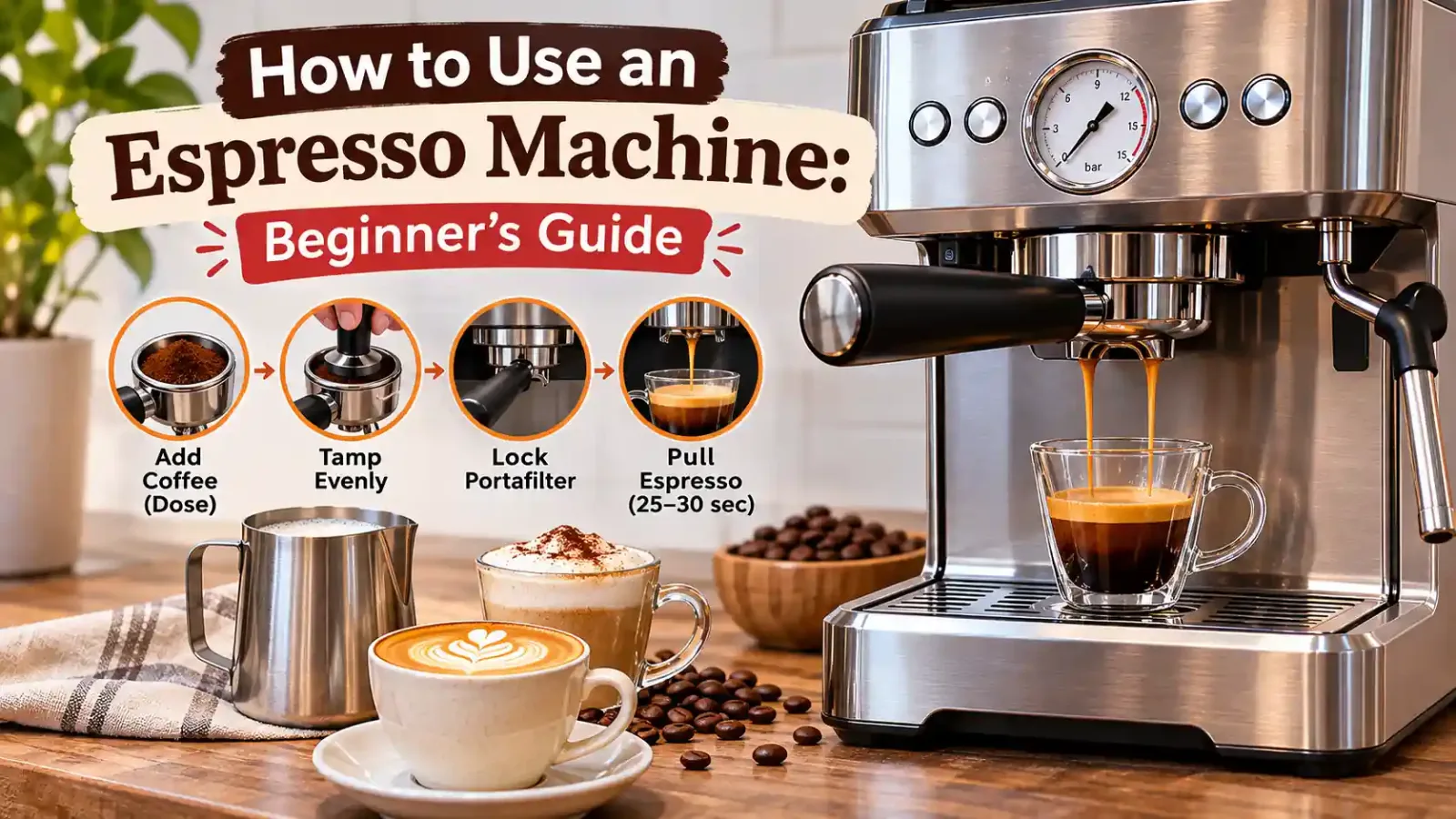 →
How to Use an Espresso Machine: Beginner's Guide
How to Use an Espresso Machine: Beginner's Guide Learning how to use an espresso machine is easier than it may seem, even if you have never made espresso at home before. With the right coffee beans, proper grind size, a…
· 22 min read