
How to Clean an Espresso Machine: Step-by-Step Guide
How to Clean an Espresso Machine: Step-by-Step Guide Cleaning your espresso machine regularly is essential for making great-tasting coffee, maintaining consistent espresso extraction, and extending the life of your…
By Menu Moments
Menu Moments editorial
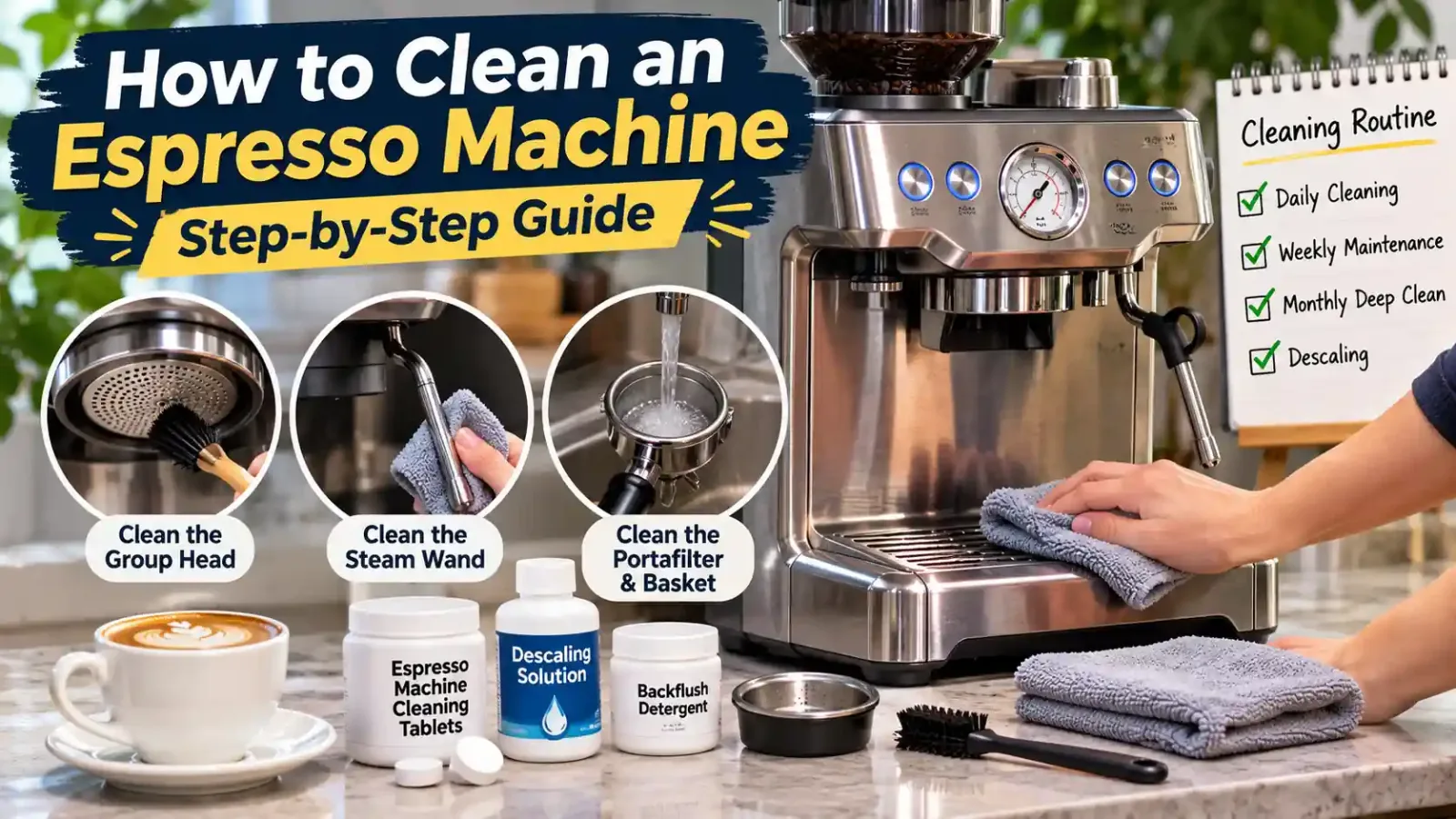
Cleaning your espresso machine regularly is essential for making great-tasting coffee, maintaining consistent espresso extraction, and extending the life of your equipment. Over time, coffee oils, milk residue, mineral deposits, and limescale buildup accumulate inside different espresso machine parts. If you ignore these deposits, they can affect coffee flavor, reduce water flow, clog internal components, and eventually lead to expensive repairs.
Whether you own a Breville Barista Express, DeLonghi Dedica, Gaggia, Rancilio, Jura, Philips, or another coffee maker, learning how to clean espresso machine components properly can make a noticeable difference in your daily coffee routine.
The good news is that espresso machine cleaning does not have to be complicated. Most daily cleaning tasks take just a few minutes, while deeper maintenance can be completed weekly or monthly, depending on your machine and usage.
This guide explains how to clean an espresso machine at home, including cleaning the group head, portafilter, filter basket, steam wand, water tank, drip tray, and other important components. You will also learn how to remove stubborn coffee residue, perform backflushing, handle espresso machine descaling, choose suitable cleaning products, and avoid common cleaning mistakes.
Why Is Regular Espresso Machine Cleaning Important?
Regular espresso machine cleaning protects both coffee quality and machine performance. Every time you prepare espresso, small amounts of coffee grounds, oils, and residue remain inside the machine.
Milk-based drinks introduce another cleaning challenge because milk residue can accumulate inside the steam wand and become difficult to remove if left untreated.
Minerals in tap water also contribute to mineral deposits and limescale buildup, particularly in areas with hard water.
Here are the main reasons to maintain a consistent cleaning routine:
Better coffee flavor: Removes old coffee oils and coffee residue that can make espresso taste bitter or unpleasant.
Consistent extraction: Keeps the group head, filter basket, and shower screen free from blockages.
Improved hygiene: Prevents milk residue and old coffee particles from accumulating.
Longer machine lifespan: Reduces unnecessary wear on internal components.
Better water flow: Helps prevent clogged espresso machine problems caused by mineral buildup.
Reliable performance: Supports consistent pressure, temperature, and espresso extraction.
What Happens If You Don't Clean Your Espresso Machine?
Ignoring espresso machine maintenance can create several problems.
Coffee oils become rancid over time, affecting the aroma and flavor of freshly brewed espresso. Milk residue can harden inside the steam wand, creating hygiene concerns and restricting steam flow.
Mineral deposits can accumulate inside the boiler, thermoblock, and water pathways. Eventually, these deposits may reduce heating efficiency and interfere with water delivery.
You might also experience:
Bitter coffee taste.
Weak or inconsistent espresso shots.
Poor espresso extraction.
Slow water flow.
Blocked group head openings.
Reduced steam pressure.
Unpleasant coffee odors.
Frequent machine maintenance warnings.
Regular cleaning helps prevent these issues before they become expensive problems.
What You Need to Clean an Espresso Machine
Before starting, gather the appropriate espresso machine cleaning supplies. You do not need an expensive collection of products, but using the correct tools makes the process easier and safer.


Essential Cleaning Supplies
Cleaning Supply | Purpose |
|---|---|
Espresso machine cleaner | Removes coffee oils and residue |
Espresso machine cleaning tablets | Helps clean compatible internal brewing components |
Espresso machine cleaning powder | Dissolves stubborn coffee oils |
Espresso machine cleaning brush | Removes grounds around the group head |
Microfiber cloth | Cleans exterior surfaces |
Blind filter basket | Used for compatible backflushing procedures |
Backflush detergent | Removes coffee oils from compatible machines |
Descaling solution | Helps dissolve mineral deposits |
Espresso machine descaler | Specifically formulated for descaling |
Soft sponge | Cleans removable components |
Clean water | Rinsing and flushing machine components |
Choosing the Right Espresso Machine Cleaner
An espresso machine cleaner is designed to remove coffee oils and residue from brewing components.
A suitable espresso machine cleaning solution should be compatible with your machine's materials and manufacturer recommendations.
You can find cleaning products in different forms:
Cleaning tablets for compatible automatic and semi-automatic machines.
Cleaning powder for backflushing and soaking removable components where permitted.
Liquid cleaning solutions for specific machine maintenance procedures.
Dedicated descaling products for mineral deposits.
Avoid assuming that every cleaning product works with every espresso machine. Always read the manufacturer's cleaning instructions before using detergents or chemical solutions.
How to Clean an Espresso Machine: Step-by-Step Instructions
The following steps explain how to clean espresso machine components safely and effectively at home.

Step 1: Turn Off and Prepare Your Espresso Machine
Start by turning off your espresso machine and allowing hot components to cool when necessary.
Unplug the machine if you are cleaning exterior areas or handling removable components according to the manufacturer's instructions.
Remove the portafilter, drip tray, water tank, and other detachable parts.
Empty any remaining water from the drip tray and discard used coffee grounds from the portafilter.
Important preparation tips:
Never immerse the electrical body of an espresso machine in water.
Allow hot components to cool before handling them.
Keep electrical connections away from water.
Check whether removable parts are dishwasher-safe.
Read the manufacturer's cleaning instructions.
Step 2: Clean the Portafilter and Filter Basket

Portafilter cleaning is one of the most important parts of daily espresso machine cleaning.
The portafilter holds the filter basket and distributes water through the ground coffee during extraction. Coffee oils and small particles can remain inside after every shot.
Follow these steps:
Remove the filter basket from the portafilter if it is detachable.
Discard all used coffee grounds.
Rinse the portafilter under warm running water.
Use a soft brush or sponge to remove remaining coffee residue.
Clean the filter basket holes carefully.
Soak compatible removable metal components in an approved cleaning solution when necessary.
Rinse everything thoroughly with clean water.
Dry the components using a clean microfiber cloth.
Cleaning Espresso Machine Basket Properly
Cleaning espresso machine basket components prevents blocked holes and inconsistent extraction.
Pay particular attention to the small openings underneath the basket. Coffee particles and oils can accumulate there, especially when you prepare multiple drinks daily.
If the basket has stubborn residue, soak it in a manufacturer-approved espresso machine cleaning solution. Avoid abrasive materials that can damage its surface.
Step 3: Clean the Espresso Machine Group Head

The group head is the section where the portafilter locks into the machine. It distributes hot water through the coffee grounds during brewing.
Cleaning espresso machine group head components helps maintain consistent water distribution and prevents old coffee particles from contaminating fresh espresso.
To clean the group head:
Remove the portafilter.
Use an espresso machine cleaning brush to remove loose coffee grounds.
Brush around the group head edges.
Pay attention to the area surrounding the group head gasket.
Run water through the group head if your machine's instructions permit.
Wipe away remaining residue with a clean cloth.
Inspect the Group Head Gasket
The group head gasket creates a seal between the portafilter and the machine.
Coffee oils and grounds can accumulate around this component. Inspect it regularly for cracks, stiffness, or deterioration.
A damaged group head gasket can cause water leakage during espresso extraction. Replace it according to your machine's maintenance instructions when necessary.
Step 4: Clean the Espresso Machine Shower Screen

The espresso machine shower screen distributes water over the coffee puck.
Coffee oils and fine particles can collect on its surface, affecting water distribution and extraction consistency.
For routine cleaning:
Brush away visible coffee particles.
Flush water through the group head.
Wipe accessible surfaces carefully.
Remove the shower screen only if the manufacturer permits it.
Clean and reinstall removable components according to the manual.
A clean shower screen helps maintain even water distribution and reduces the risk of coffee residue affecting subsequent shots.
Step 5: Clean the Steam Wand

Steam wand cleaning is particularly important if you regularly prepare cappuccinos, lattes, and other milk-based drinks.
Milk contains proteins and fats that stick to hot metal surfaces. When milk dries, it becomes harder to remove and can create unpleasant odors.
Learning how to clean espresso machine steam wand components properly helps maintain hygiene and steam performance.
Follow these steps:
Immediately after steaming milk, wipe the steam wand using a clean, damp microfiber cloth.
Direct a short burst of steam into a suitable drip tray to clear milk from the nozzle, following the manufacturer's instructions.
Check the steam wand tip for blocked openings.
Use an appropriate cleaning brush if milk residue remains.
Remove and soak detachable steam wand tips only when permitted.
Wipe the wand again after cleaning.
Milk Residue Removal From the Steam Wand
Milk residue removal should happen immediately after every use.
If milk dries inside the steam wand, it can become difficult to remove and may restrict steam flow.
For stubborn deposits, use a manufacturer-approved milk system cleaner. Never insert sharp objects into steam openings because they can damage the nozzle.
Step 6: Clean the Water Tank

Cleaning espresso machine water tank components helps prevent unpleasant odors, visible buildup, and contamination.
The water tank stores the water used for brewing and steaming. If it remains dirty, particles and mineral residue can accumulate over time.
To clean it:
Remove the water tank.
Empty any remaining water.
Rinse the inside using clean water.
Use a soft sponge to remove visible residue.
Wash with mild dish soap only if permitted by the manufacturer.
Rinse thoroughly to remove soap.
Allow the tank to dry.
Refill it with fresh, suitable water.
Check Your Coffee Machine Water Filter
Some espresso machines include a coffee machine water filter that helps reduce certain impurities and minerals.
Check the filter regularly and replace it according to the manufacturer's recommended schedule.
Remember that water filters do not necessarily eliminate the need for espresso machine descaling.
Step 7: Clean the Espresso Machine Drip Tray

Espresso machine drip tray cleaning is a simple but important maintenance task.
The drip tray collects excess water, spilled coffee, and occasional milk droplets.
If you leave it dirty, it can develop unpleasant smells and become a breeding ground for unwanted microorganisms.
Follow these steps:
Remove the drip tray.
Empty collected liquid.
Wash removable components with warm water and suitable dish soap.
Clean corners and drainage areas.
Rinse thoroughly.
Dry with a clean cloth.
Reinstall the tray.
Emptying and rinsing the drip tray daily is especially important for machines used frequently.
Step 8: Perform Backflushing on Compatible Espresso Machines

Backflushing espresso machine components helps remove coffee oils and residue from internal brewing pathways.
However, backflushing is not suitable for every espresso machine. It is generally designed for compatible machines with a three-way solenoid valve.
Never perform this procedure on a machine unless its manufacturer specifically supports it.
What Is an Espresso Machine Backflush?
An espresso machine backflush uses a blind filter basket to create pressure that pushes water and cleaning solution back through compatible internal pathways.
The process helps remove coffee oils that ordinary rinsing may not eliminate.
How to Backflush an Espresso Machine
Remove the regular filter basket from the portafilter.
Insert the blind filter basket.
Add the recommended amount of backflush detergent if performing a detergent cleaning cycle.
Lock the portafilter into the group head.
Run the cleaning cycle according to the manufacturer's instructions.
Allow the machine to release pressure between cycles.
Remove the portafilter carefully.
Rinse it thoroughly.
Repeat the required cycles using clean water.
Run a final rinse to remove detergent residue.
A blind filter basket is sometimes called a backflush basket because it prevents water from flowing normally through the portafilter.
Backflush Detergent vs. Regular Cleaning Products
Backflush detergent is specifically formulated to remove coffee oils from compatible espresso machine components.
Do not substitute ordinary dish soap or household detergents for dedicated espresso machine cleaning products.
Follow the recommended dosage because excessive detergent can leave residue inside the machine.
Step 9: Clean the Exterior of Your Espresso Machine

Exterior cleaning improves the appearance of your coffee maker and prevents stains from becoming difficult to remove.
Use a clean, slightly damp microfiber cloth to wipe:
Stainless steel panels.
Plastic surfaces.
Buttons and control panels.
Cup warming trays.
Exterior water tank surfaces.
Accessible areas around the machine.
Avoid spraying cleaning products directly onto electrical components or control panels.
How to Descale an Espresso Machine
Cleaning and descaling are two different maintenance procedures.
Regular cleaning removes coffee oils, milk residue, and coffee particles. Descaling removes mineral deposits and limescale buildup caused by minerals in water.
Espresso machine descaling is important because mineral deposits can accumulate inside the boiler, thermoblock, pipes, and other water-carrying components.

Why Is Descaling Important?
Water naturally contains minerals such as calcium and magnesium. When water is heated, these minerals can form hard deposits inside the machine.
The amount of buildup depends on water hardness, water quality, and how frequently you use the machine.
Without regular descaling, mineral buildup may:
Restrict water flow.
Affect heating performance.
Reduce brewing consistency.
Cause unusual machine noises.
Trigger maintenance warnings.
Increase the likelihood of internal component problems.
How to Descale an Espresso Machine
The exact process varies between manufacturers, but the general procedure is:
Read the machine's descaling instructions.
Empty the water reservoir.
Prepare the recommended descaling solution.
Add the solution to the water tank as directed.
Start the designated descaling program.
Allow the solution to move through the machine according to the instructions.
Empty the drip tray when necessary.
Rinse the water reservoir thoroughly.
Refill it with fresh water.
Run the required rinsing cycles.
For a more detailed procedure, read our guide on how to descale an espresso machine.
Choosing an Espresso Machine Descaler
An espresso machine descaler is formulated to dissolve mineral buildup inside compatible coffee machines.
Common descaling products include:
Manufacturer-branded descaling solutions.
Citric-acid-based descalers.
Other commercially formulated espresso machine descaling products.
Always choose a product compatible with your machine.
Citric Acid Descaling
Citric acid descaling is used in some coffee machine maintenance procedures because citric acid can dissolve certain mineral deposits.
However, not every espresso machine manufacturer recommends homemade citric acid mixtures.
Use a properly formulated product and follow the manufacturer's instructions regarding concentration, temperature, and rinsing.
Can You Use Vinegar for Espresso Machine Cleaning?
Many people ask, "Can you use vinegar to clean an espresso machine?"
Although vinegar is acidic and can dissolve some mineral deposits, it is not universally recommended for espresso machines.
Potential problems include:
Strong lingering odors.
Residual vinegar taste.
Compatibility concerns with certain seals and components.
Inadequate removal of certain deposits.
Possible damage if used incorrectly.
A manufacturer-approved descaling solution is generally the safer choice.
How to Clean Different Types of Espresso Machines
Not all espresso machines have the same internal design. Cleaning procedures depend on the brewing system, available cleaning programs, and removable components.
How to Clean a Semi-Automatic Espresso Machine
A semi-automatic espresso machine usually includes a portafilter, group head, filter basket, and steam wand.
Cleaning typically involves:
Rinsing the portafilter after every use.
Brushing the group head.
Cleaning the shower screen.
Wiping the steam wand.
Emptying the drip tray.
Backflushing when supported.
Descaling according to the manual.
These machines require more hands-on cleaning than fully automatic models.
How to Clean an Automatic Espresso Machine
Automatic espresso machine cleaning usually involves a combination of manual cleaning and automated maintenance programs.
Depending on the model, the machine may have dedicated cleaning cycles, removable brewing units, or cleaning notifications.
Common maintenance tasks include:
Emptying the used coffee grounds container.
Cleaning the drip tray.
Rinsing the brewing unit.
Cleaning the water reservoir.
Running automatic cleaning programs.
Replacing water filters.
Descaling when prompted.
How to Clean a Super-Automatic Coffee Machine
Super-automatic coffee machine cleaning is particularly important because these machines handle grinding, brewing, and sometimes milk preparation internally.
Follow the manufacturer's cleaning schedule and pay attention to removable brewing units.
Clean the following components regularly:
Bean hopper.
Coffee grounds container.
Brewing group.
Water tank.
Drip tray.
Milk container.
Milk frothing system.
Coffee dispensing spouts.
Some models automatically request cleaning tablets or milk system cleaning solutions.
How to Clean a Manual Espresso Machine
Manual espresso machines generally have fewer automated cleaning features, so regular hands-on maintenance is important.
After each use:
Remove the portafilter.
Discard used coffee grounds.
Rinse the basket.
Clean the group head or brewing chamber.
Wipe the exterior.
Clean any removable water components.
Follow the manufacturer's instructions before attempting internal maintenance or disassembly.
How to Clean Popular Espresso Machine Brands
Different manufacturers use different cleaning procedures, cleaning tablets, descaling solutions, and maintenance cycles.
Here are some brand-specific considerations.
How to Clean Breville Espresso Machine

Breville espresso machines often include cleaning alerts and dedicated maintenance programs.
For routine cleaning:
Clean the portafilter and basket after each use.
Wipe the steam wand after steaming milk.
Brush the group head.
Empty the drip tray.
Clean the shower screen.
Run the recommended cleaning cycle when prompted.
Descale according to the machine's water-hardness settings and manual.
How to Clean Breville Barista Express
The Breville Barista Express includes a built-in grinder and semi-automatic brewing system.
Pay attention to the following:
Portafilter and filter baskets.
Group head and shower screen.
Steam wand.
Grinder chute and accessible grinder areas.
Drip tray.
Water reservoir.
Use the supplied cleaning tools and compatible cleaning tablets.
How to Clean Breville Barista Pro
The Breville Barista Pro also features an integrated grinder and steam wand.
Follow the machine's cleaning alerts and use its designated cleaning procedure.
Regularly clean the grinder area, portafilter, group head, and milk steaming components.
For more specific instructions, see our guide on how to clean a Breville espresso machine.
How to Clean DeLonghi Espresso Machine

DeLonghi espresso machines include different models with varying cleaning and descaling requirements.
For general maintenance:
Remove and rinse the portafilter.
Clean the filter baskets.
Wipe the steam wand.
Wash the water tank.
Empty the drip tray.
Follow the machine's descaling instructions.
Run any available maintenance cycles.
How to Clean DeLonghi Dedica
The DeLonghi Dedica is a compact espresso machine with a removable water tank and manual brewing components.
Regularly clean its filter holders, filter baskets, steam wand, and drip tray.
Check the model's manual for the recommended descaling procedure and cleaning frequency.
How to Clean Gaggia Espresso Machine

Gaggia espresso machines, including the Gaggia Classic, require regular group head and portafilter cleaning.
Important tasks include:
Removing coffee grounds.
Cleaning the shower screen.
Washing the portafilter.
Inspecting the group head gasket.
Cleaning the steam wand.
Backflushing only when supported by the specific model.
Following manufacturer-approved descaling procedures.
How to Clean Rancilio Espresso Machine

Rancilio espresso machines are popular among home espresso enthusiasts.
For regular cleaning, pay attention to the group head, portafilter, steam wand, drip tray, and water reservoir.
If your model supports backflushing, use the recommended detergent and cleaning cycle.
How to Clean Jura Coffee Machine

Jura coffee machines often include automatic cleaning and descaling programs.
Use compatible Jura cleaning tablets and descaling products when specified.
Regularly empty the grounds container, clean the drip tray, and maintain the milk system if your model includes one.
How to Clean Philips Espresso Machine

Philips automatic espresso machines generally feature removable brewing groups and automated maintenance functions.
Important tasks include:
Rinsing the brewing group.
Cleaning the water tank.
Emptying the drip tray.
Washing the coffee grounds container.
Maintaining the milk system.
Replacing the AquaClean filter when required.
Running the recommended cleaning and descaling programs.
How to Clean Nespresso Machine

Nespresso machines use capsules instead of traditional ground coffee portafilters.
Their cleaning requirements are therefore slightly different.
To clean a Nespresso machine:
Remove used capsules.
Empty the capsule container.
Remove and wash the drip tray.
Clean the water reservoir.
Wipe the capsule insertion area.
Run a water-only cleaning or rinsing cycle according to the model's instructions.
Descale when necessary.
Do not use traditional espresso machine backflushing procedures on a capsule machine.
How Often Should You Clean an Espresso Machine?
Espresso machine cleaning frequency depends on how often you use your coffee maker, the type of machine, and the hardness of your water.
A machine used several times daily generally needs more frequent maintenance than one used occasionally.
The following table provides a practical starting point.
Component | Recommended Cleaning Frequency |
|---|---|
Portafilter | After every use |
Filter basket | After every use |
Steam wand | After every use |
Group head | Daily |
Shower screen | Daily or as needed |
Drip tray | Daily |
Water tank | Every few days or as needed |
Grinder area | Weekly or as recommended |
Backflushing | According to manufacturer instructions |
Brewing unit | Weekly or as recommended |
Exterior surfaces | Daily or as needed |
Descaling | Based on water hardness and machine instructions |
Daily Espresso Machine Cleaning
A daily cleaning routine prevents coffee oils and milk residue from accumulating.
Complete these tasks after preparing coffee:
Rinse the portafilter.
Clean the filter basket.
Flush the group head.
Wipe the steam wand.
Empty the drip tray.
Clean visible coffee residue.
Wipe exterior surfaces.
Daily espresso machine cleaning is particularly important for households that prepare multiple espresso drinks.
Weekly Espresso Machine Maintenance
Weekly espresso machine maintenance involves cleaning components that may not require attention after every shot.
Recommended tasks include:
Deep-cleaning removable baskets.
Cleaning the drip tray thoroughly.
Washing the water tank.
Cleaning accessible grinder areas.
Inspecting the shower screen.
Cleaning removable milk system components.
Backflushing compatible machines when required by the manufacturer.
Monthly Espresso Machine Cleaning
Monthly espresso machine cleaning focuses on deeper maintenance.
Depending on usage and machine design, you may need to:
Inspect the group head gasket.
Clean removable brewing components.
Check the water filter.
Inspect the water reservoir for deposits.
Run the recommended cleaning program.
Check for visible mineral deposits.
Review the descaling schedule.
Monthly cleaning does not mean every machine must be descaled monthly. Descaling frequency depends on water hardness, usage, and manufacturer guidance.
Espresso Machine Deep Cleaning Checklist
Deep cleaning espresso machine components is useful when your coffee maker has visible buildup, unpleasant odors, inconsistent performance, or has not received maintenance for an extended period.
Use this espresso machine deep cleaning checklist as a general reference.
Common Espresso Machine Cleaning Mistakes to Avoid
Even experienced coffee enthusiasts can make mistakes when cleaning their machines.
Understanding common espresso machine cleaning mistakes helps protect your equipment and maintain coffee quality.
1. Using the Wrong Cleaning Solution
Not every household cleaning product is safe for espresso machines.
Use food-safe cleaning products specifically intended for coffee equipment and follow the manufacturer's recommendations.
2. Ignoring the Steam Wand
Leaving milk residue inside the steam wand can cause hygiene problems and block steam openings.
Always wipe the wand and purge it after steaming milk.
3. Forgetting to Clean the Portafilter
Old coffee oils can accumulate inside the portafilter and basket.
Rinse these components after every brewing session.
4. Descaling Too Frequently
Descaling unnecessarily can expose internal components to cleaning chemicals more often than recommended.
Follow your manufacturer's guidance and consider your water hardness.
5. Using Too Much Detergent
Excessive cleaning products can leave residue inside the machine.
Use the recommended quantity and complete all required rinsing cycles.
6. Performing Backflushing on an Incompatible Machine
Some machines do not support backflushing.
Using an incorrect procedure can cause damage. Check your model's instructions first.
7. Neglecting the Water Filter
A dirty or expired filter may no longer perform as intended.
Inspect and replace it according to the manufacturer's maintenance schedule.
Espresso Machine Maintenance Tips for Better Performance
Good espresso machine maintenance involves more than occasional cleaning.
A few simple habits can help keep your equipment in excellent working condition.
Use Suitable Water
Water quality directly affects espresso machine performance.
Hard water contains higher concentrations of calcium and magnesium, which contribute to limescale buildup.
Check the water hardness recommendations for your specific machine. Use an appropriate filtration system or water treatment method when recommended.
Keep Coffee Grinder Components Clean
Cleaning coffee grinder components is another important part of coffee equipment maintenance.
Ground coffee particles and coffee oil buildup can collect inside the grinder, particularly around accessible burr areas and the chute.
Follow these practices:
Remove loose coffee grounds regularly.
Clean accessible grinder areas using a suitable brush.
Avoid introducing water into electrical grinder components.
Use grinder cleaning products only when approved.
Follow the manufacturer's instructions before removing burrs.
A clean grinder helps maintain consistent grinding and reduces old coffee residue in fresh coffee.
Replace Worn Parts When Necessary
Espresso machine parts experience wear over time.
Common components that may eventually require replacement include:
Group head gasket.
Shower screen.
Water filter.
Steam wand seals.
Portafilter basket.
Water tank seals.
Inspect these parts periodically and replace them when the manufacturer recommends doing so or when visible damage occurs.
Follow Manufacturer Cleaning Instructions
Every espresso machine has different internal components and cleaning requirements.
Some machines require specific tablets, while others use liquid solutions or automated cleaning cycles.
Always consult your machine's user manual before removing internal components, applying detergent, or performing maintenance.
Espresso Machine Troubleshooting After Cleaning
Sometimes an espresso machine may not perform as expected after cleaning.
The following table covers common problems and their possible causes.
Problem | Possible Cause | What to Check |
|---|---|---|
Clogged espresso machine | Coffee particles or mineral buildup | Group head and water pathways |
Slow water flow | Mineral deposits or blocked basket | Filter basket and descaling requirements |
Bitter coffee taste | Old coffee oils or brewing issues | Portafilter and group head |
Poor espresso extraction | Dirty basket, grinder issues, or incorrect grind | Basket, grinder, and extraction settings |
Weak steam pressure | Milk residue or scale buildup | Steam wand and manufacturer maintenance instructions |
Water leaking around portafilter | Dirty or damaged gasket | Group head gasket |
Unpleasant smell | Stagnant water or milk residue | Water tank and milk system |
Cleaning warning remains on | Cleaning cycle not completed | Manufacturer's cleaning procedure |
Why Does My Espresso Machine Still Taste Bitter After Cleaning?
Bitter coffee taste can have several causes.
Old coffee oils inside the portafilter, group head, and shower screen may contribute to unpleasant flavors.
However, bitterness can also result from:
Over-extraction.
Very fine coffee grounds.
Excessively high brewing temperature.
Stale coffee beans.
Incorrect brewing ratios.
Cleaning your equipment is a good starting point, but you may also need to adjust your coffee preparation technique.
Why Is My Espresso Machine Still Clogged?
If your machine remains clogged after routine cleaning, there may be mineral buildup or a blockage deeper inside the water pathways.
Check the filter basket and accessible brewing components first.
If the problem continues, follow the manufacturer's troubleshooting instructions or contact an authorized technician.
Avoid opening pressurized or electrical components yourself.
What Does the Clean Me Light on an Espresso Machine Mean?
A clean me light espresso machine warning generally indicates that the machine has reached a programmed cleaning interval.
The exact meaning depends on the brand and model.
For example, some machines use separate alerts for cleaning and descaling. These procedures address different types of buildup, so do not assume that one replaces the other.
Check your user manual to determine which maintenance cycle is required.
Frequently Asked Questions About Espresso Machine Cleaning
How to Clean an Espresso Machine at Home?
To clean an espresso machine at home, remove and rinse the portafilter and filter basket, brush the group head, wipe the steam wand, empty the drip tray, and wash the water reservoir. Run manufacturer-approved cleaning and descaling cycles when required.
How Often Should You Clean an Espresso Machine?
You should clean the portafilter, filter basket, and steam wand after every use. Clean the group head and drip tray daily, perform deeper maintenance weekly or as recommended, and descale according to water hardness and manufacturer instructions.
What Is the Best Espresso Machine Cleaner?
The best espresso machine cleaner is a product specifically formulated for your machine's cleaning requirements. Manufacturer-approved cleaning tablets, powders, and detergents are suitable options when used according to the product instructions.
Can You Use Vinegar to Clean an Espresso Machine?
Vinegar is not recommended for every espresso machine. It can leave a strong smell, affect certain components, and may not be compatible with the manufacturer's maintenance procedure. A suitable commercial descaling solution is generally preferable.
How Long Does Espresso Machine Cleaning Take?
Daily espresso machine cleaning usually takes around 5–10 minutes, depending on the machine and number of components. A deeper cleaning session may take 20–45 minutes, while descaling can take longer depending on the machine's automated program.
These are approximate times and do not include extended soaking or cooling periods.
Can I Use Dish Soap to Clean My Espresso Machine?
Mild dish soap may be suitable for certain removable components, such as drip trays and water reservoirs, if the manufacturer permits it. Avoid putting dish soap inside internal brewing pathways or using it as a replacement for espresso machine cleaning detergent.
What Is the Difference Between Cleaning and Descaling an Espresso Machine?
Cleaning removes coffee grounds, coffee oils, and milk residue from accessible components and brewing pathways. Descaling dissolves mineral deposits and limescale inside the water system. Both are important, but they serve different purposes.
Why Is Descaling Important?
Descaling helps remove calcium and magnesium deposits that accumulate inside the machine due to water heating. Regular descaling, when performed according to manufacturer recommendations, helps maintain water flow and heating performance.
Can I Clean My Espresso Machine Without Cleaning Tablets?
Yes. Many daily cleaning tasks only require clean water, a soft brush, and a microfiber cloth. However, certain machines require dedicated cleaning tablets for their automated cleaning programs. Follow the manufacturer's instructions rather than substituting household products.
Should I Clean My Espresso Machine After Every Use?
You should rinse the portafilter and basket, clean the steam wand, and flush the group head after each brewing session. A complete deep cleaning is not necessary after every cup, but daily maintenance is important.
How Do I Know When My Espresso Machine Needs Descaling?
Common signs include reduced water flow, visible mineral buildup, maintenance alerts, and changes in heating or brewing performance. However, you should follow your machine's recommended descaling schedule rather than waiting for symptoms to appear.
What Is the Best Water for an Espresso Machine?
The best water is water that meets the machine manufacturer's recommended mineral content and hardness range. Properly filtered water can help reduce unwanted mineral buildup, but extremely low-mineral or distilled water may not be suitable for every machine.
Final Thoughts
Learning how to clean an espresso machine is one of the most valuable habits for anyone who enjoys making coffee at home. Regular maintenance helps remove coffee oils, milk residue, mineral deposits, and other buildup that can affect your machine's performance.
Start with daily cleaning by rinsing the portafilter, cleaning the filter basket, wiping the steam wand, and emptying the drip tray. Add weekly and monthly maintenance tasks according to your machine's design and usage.
Remember that espresso machine cleaning and descaling are different procedures. Use suitable cleaning products, follow manufacturer instructions, and avoid unnecessary disassembly or incompatible cleaning methods.
Whether you own a Breville, DeLonghi, Gaggia, Rancilio, Jura, Philips, or Nespresso machine, a consistent cleaning routine can help you enjoy better coffee and keep your equipment working reliably for years.
If you are still choosing equipment for your home coffee setup, explore our guide to the best espresso machines under $500
Enjoyed this tip?
A weekly hit of kitchen know-how.
Tips, techniques and small upgrades — every Sunday.
Keep reading
You might also like
 →
How to Make Coffee with an Espresso Machine
How to Make Coffee with an Espresso Machine: A Complete Beginner's Guide Learning how to make coffee with an espresso machine is easier than many beginners expect. Whether you own a manual espresso machine,…
· 22 min read
 →
How Does an Espresso Machine Work? Complete Guide
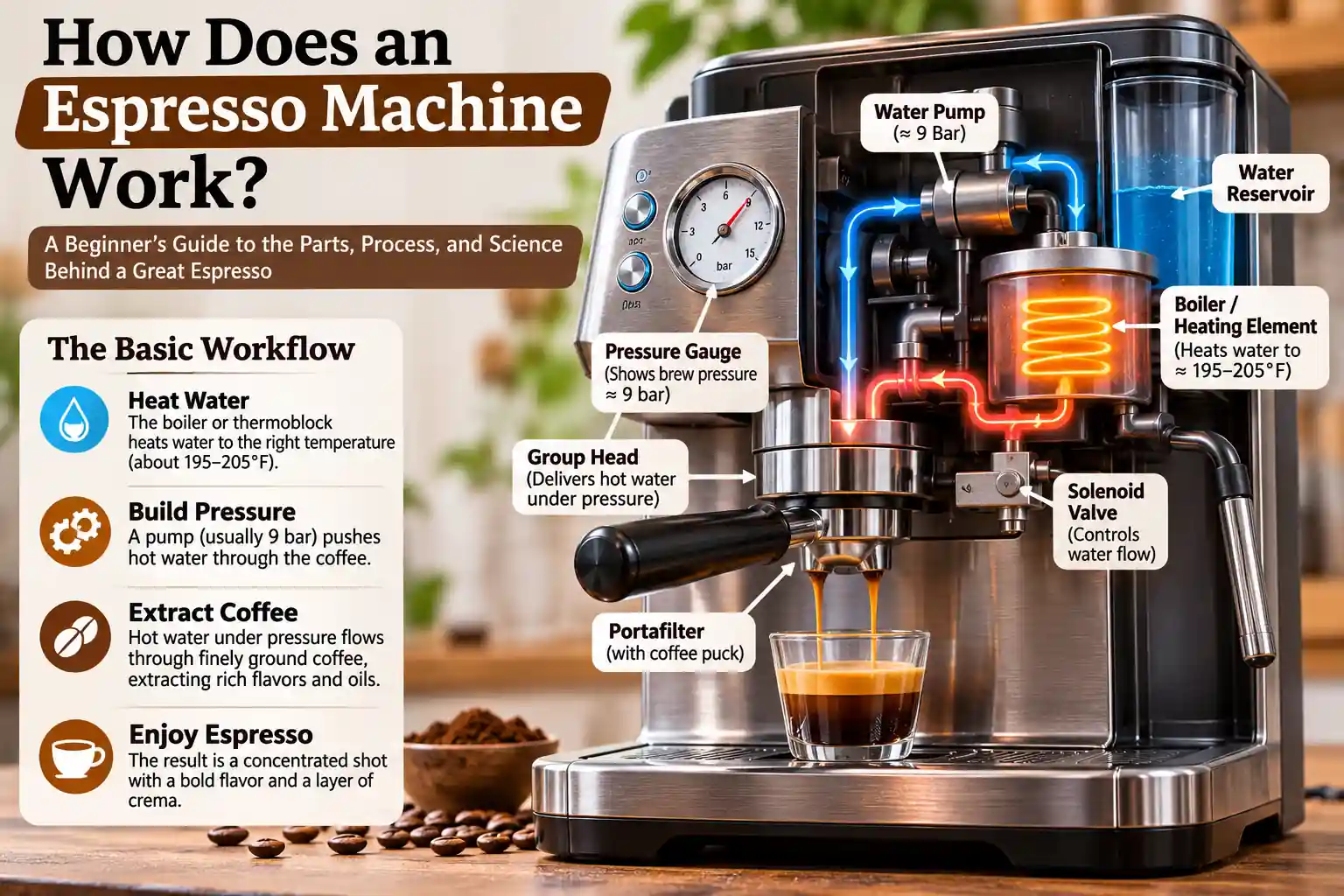
How Does an Espresso Machine Work? A Complete Beginner's Guide An espresso machine transforms finely ground coffee beans and hot water into a concentrated coffee drink known as espresso. Unlike traditional drip coffee…
· 26 min read
7 Best Espresso Machines Under $500 (2026 Buying Guide)
Discover the best espresso machine under $500. Compare Breville, Gaggia, De'Longhi, and CASABREWS models by price, features, pros, and cons.
· 34 min read